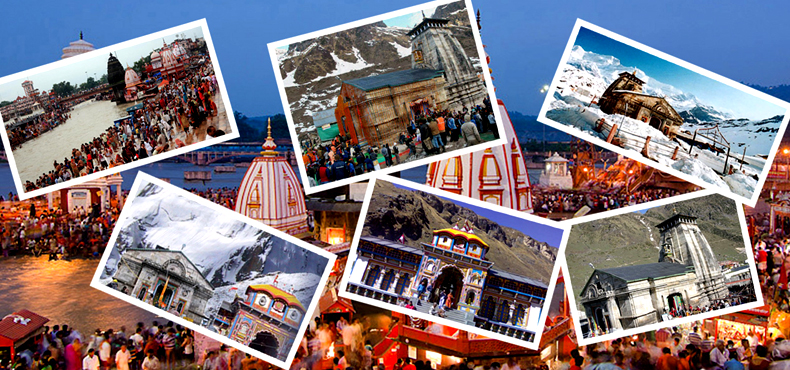
Uttarakhand holds prime significance as a religious site for Hindus. This land is filled with various important Hindu pilgrimage locations that are supposed to be utterly divine in nature. Millions of devotees flock in these parts of Uttarakhand to explore their chances of attaining ‘Nirvana’. The write-up below focuses on the major religious sites in Uttarakhand.
Garhwal is located on the western side of Uttarakhand, the Himalayan state and is known as ‘Dev Bhumi’ or the ‘Land of Gods’. It shelters the holiest structures and sites of the Hindus that are connected through invisible yet living beliefs and myths of this religious sect. Here are some of the important religious sites that make this land ‘Godly’ in its appeal.
Must Read: Best Hill Stations in Uttarakhand
The ‘Char Dham’:
The Chardham Yatra is the visit to the four important temples located at the holiest Indian River, the Ganges, which include Gangotri, Yamunotri, Badrinath, and Kedarnath. The journey is an extremely tiring and risky one despite the fact that all the roads to the temples are situated close to each other. The trip can also be fatal depending on the weather and the geographic condition of the region. Chardham Yatra by Helicopter happens to be one of the best possible ways to transform this challenging journey into a comfortable one.
Badrinath
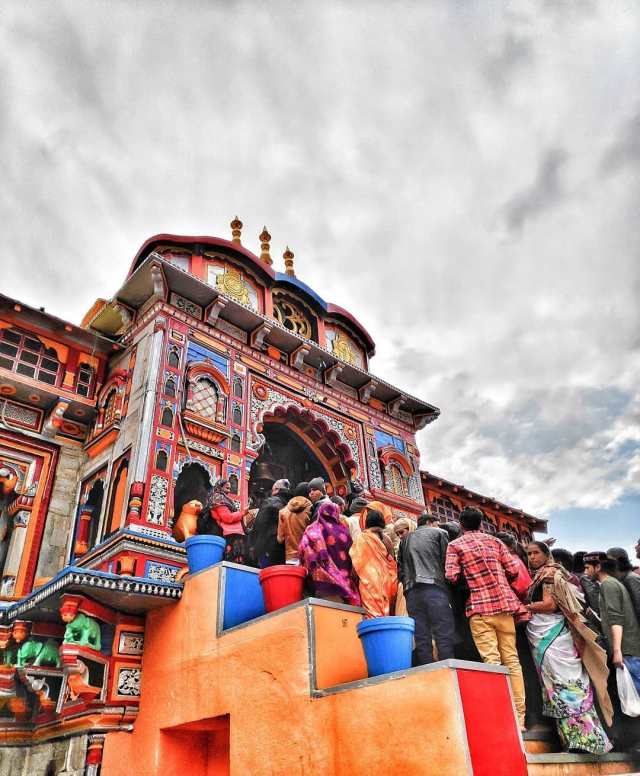
Located between the Narayana and Nar ranges of the Chamoli district, Badrinath stands 11,000 feet above sea level. This temple lies just below the Nilkantha peak which is 6596m above sea level. It is said that Lord Shiva used to stay in this place until Lord Vishnu persuaded him to relocate to Kedarnath on a permanent basis. The last settlement (Indian side) nearest to Badrinath is the Mana village, after which the Himalayas come to an end and the Tibetan plateau starts. The cave in which Mahabharata was written by Vyasa is also located here. It is also believed that the Pandavas were able to locate the path to paradise out here with only a dog and Yudhisthira making it through to heaven.
Kedarnath
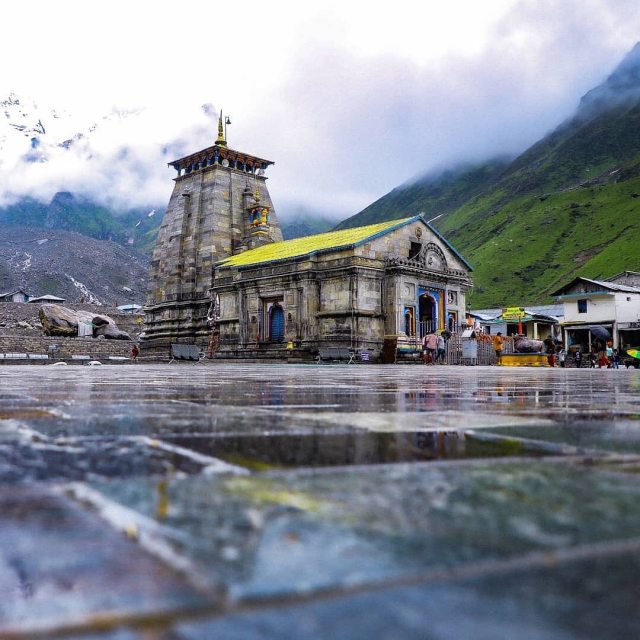
This temple is situated at around the same height as Badrinath, crowning the ‘Mandakini’ valley. It was supposedly constructed by the ‘Pandavas’ and Adi Shankaracharya reconstructed it during the 9th century. This temple also happens to be first among the ‘Panch Kedars’ according to the lineage of Mahabharata and ranks among the 12 ‘Jyotirlingas’ of India-one in which is supposed to have evolved as a never-ending light and fire pillar.
Yamunotri and Gangotri
The Yamunotri and Gangotri temples stand 10,000 feet above sea level and mark the starting of Yamuna and Bhagirathi respectively. The location is decorated with a Himalayan setting. In Yamunotri, the temple is dedicated to Goddess Yamuna who is the sister of Yama, the ‘God of Death’ according to the Hindus. It is believed that this Goddess Yamuna preserves those that visit the temple from ‘Akaal Mrityu’ or untimely death. The temple at Gangotri lies some kilometers below the ‘Gaumukh’, the place of Bhagirathi’s origin from the ‘Gangotri’ glacier. This place is significant as it is the origin of Ganga, protected by the locks of Lord Shiva.
The ‘Panch Kedar’:
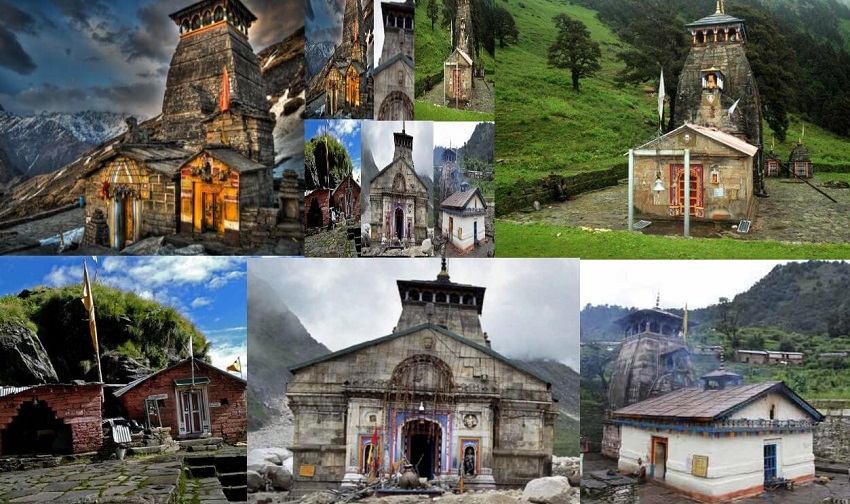
The ‘Kedar’ temples- Tungnath, Kedarnath, Rudranath, Kalpeshwar, and Madhyamaheshwar – originate from the end chapter of Mahabharata. The Pandavas are supposed to have come to the Himalayan range to find atonement for killing their kin, looking for Lord Shiva. They had earlier spent exile time in this very region. These brothers found Lord Shiva in Mandakini valley and Guptkashi. However, Shiva was unwilling to forgive so he took a bull’s shape which was caught by Bhima. Then the bull tore into pieces and disappeared. The hump of the bull then reappeared in Kedarnath, the belly in Madhyamaheshwar, the face in Rudranath, the locks in Kalpeshwar, and the shoulder in Tungnath. The forehead of the bull appeared in Pashupatinath which is now in Nepal.
All this stands as evidence to the fact that Uttarakhand has found a distinct position among the Hindus with all the major temples located in this region, making it the ‘Land of Gods’.
Must Read: National Parks in Uttarakhand
 Kanika Travel Blogger